






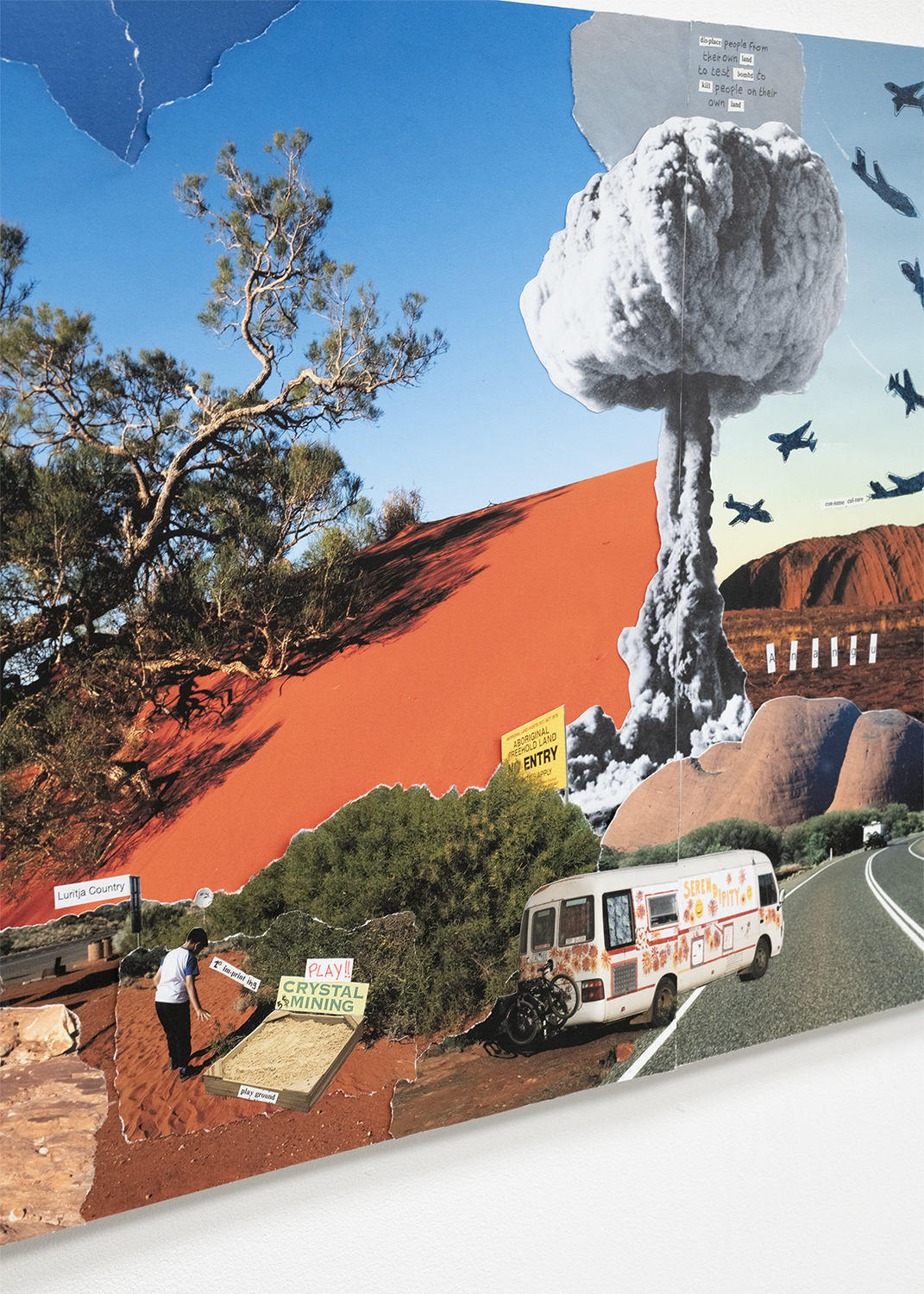
One land, many countries
Mixed media
(2024)
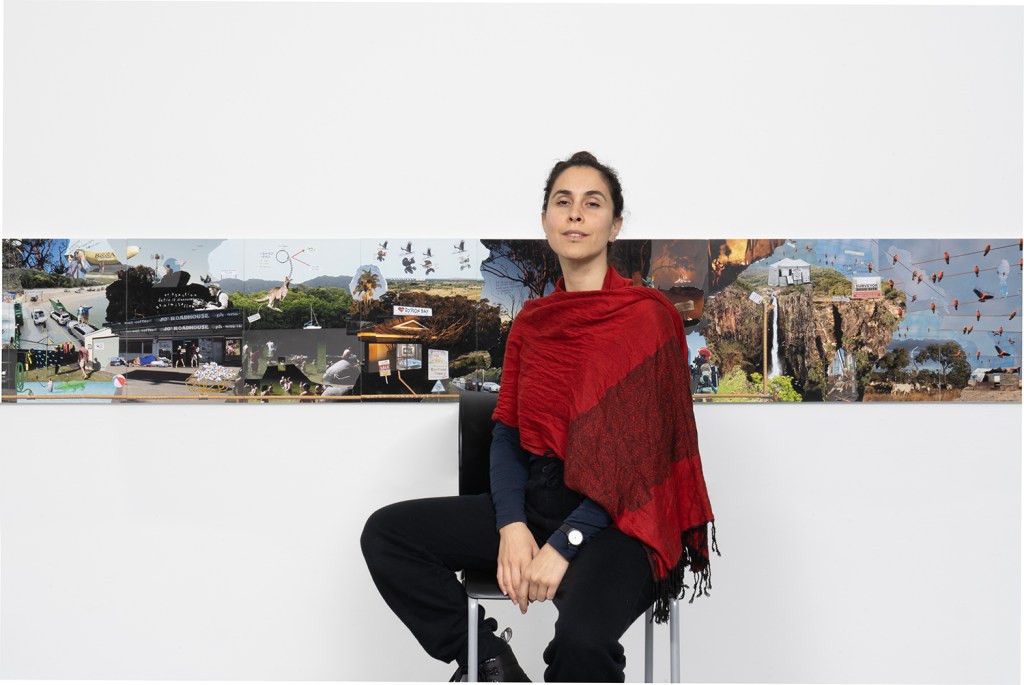
5940 x 420 cm (whole artwork)
297 x 420 cm (single panel)
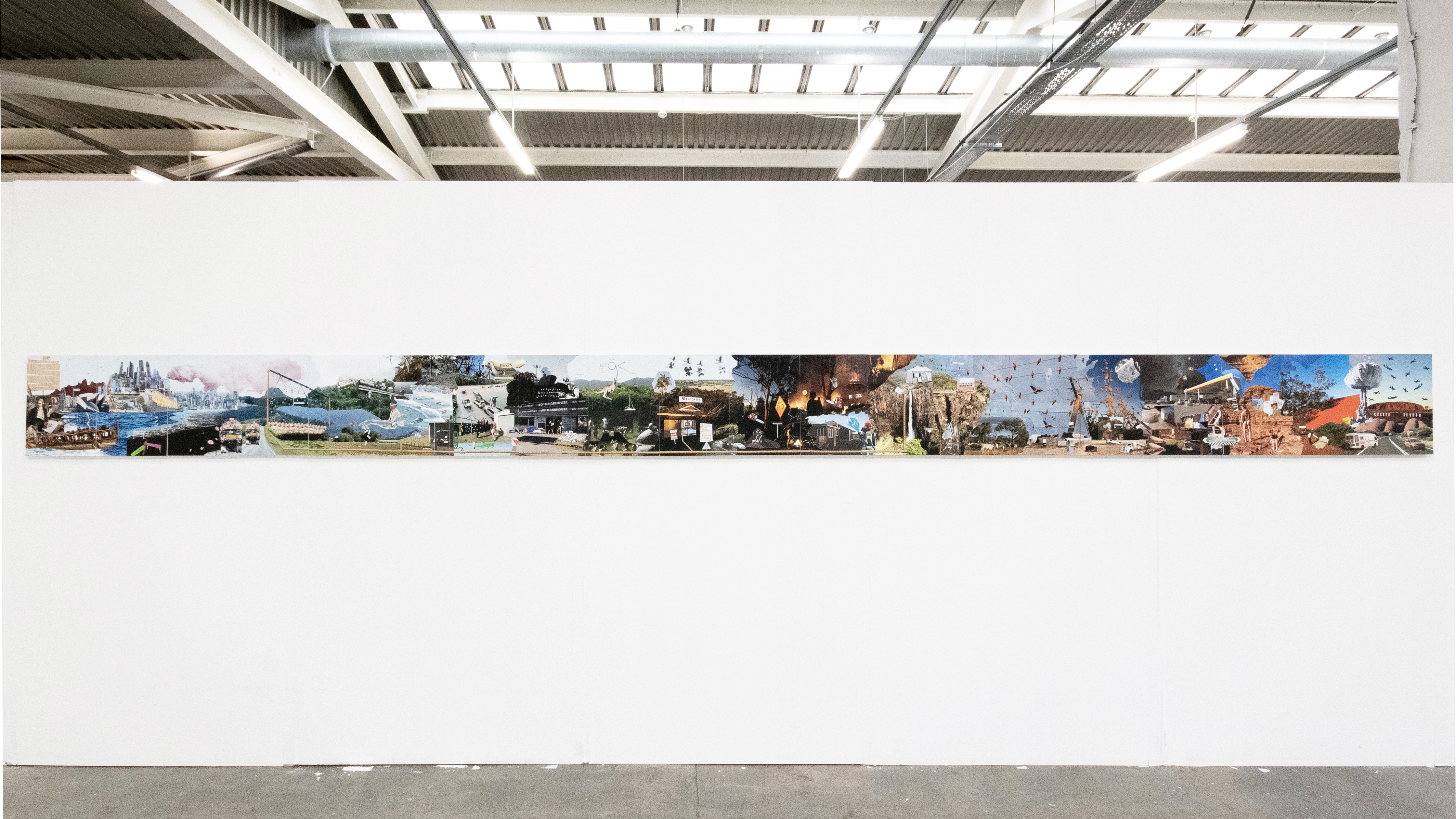
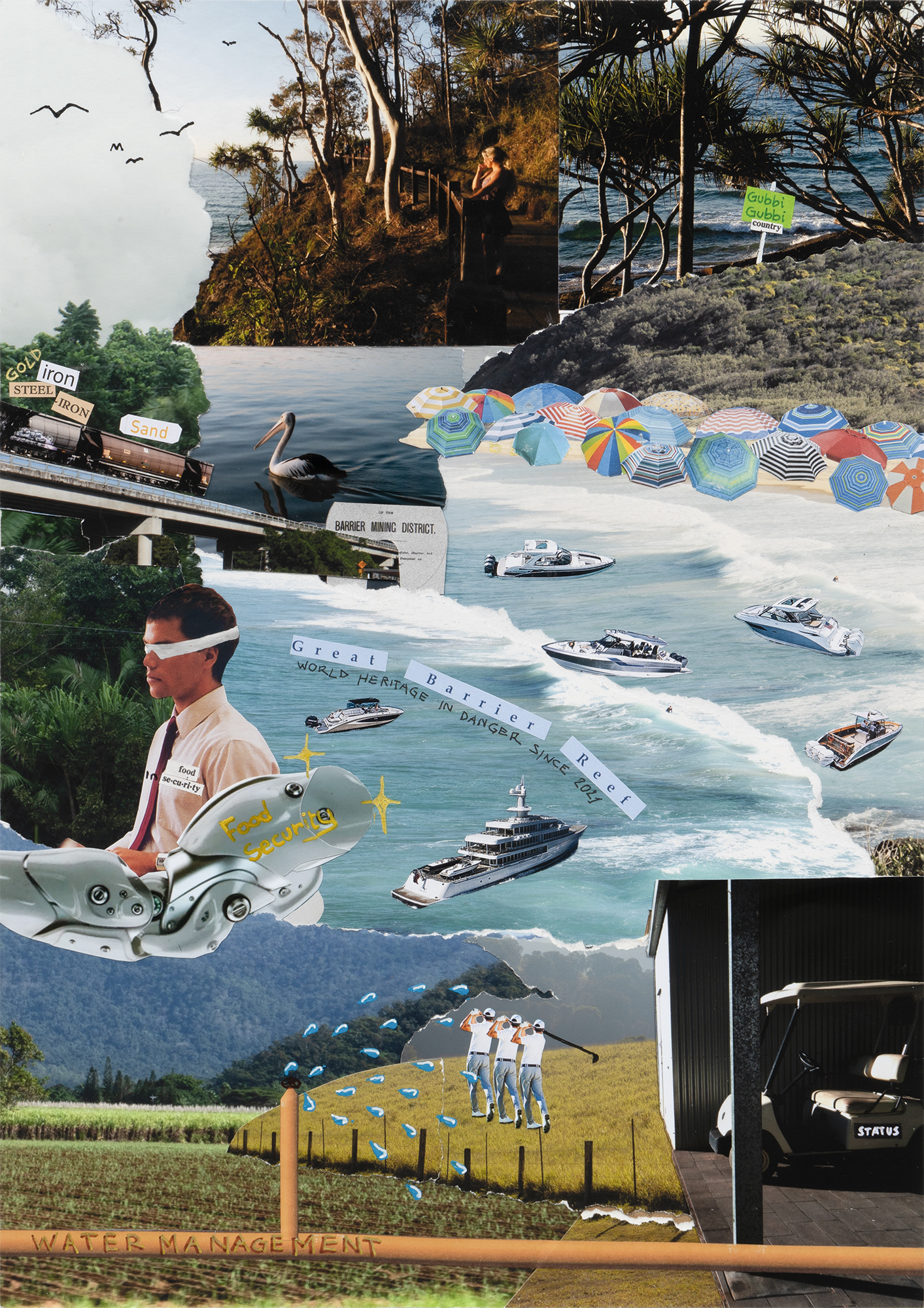
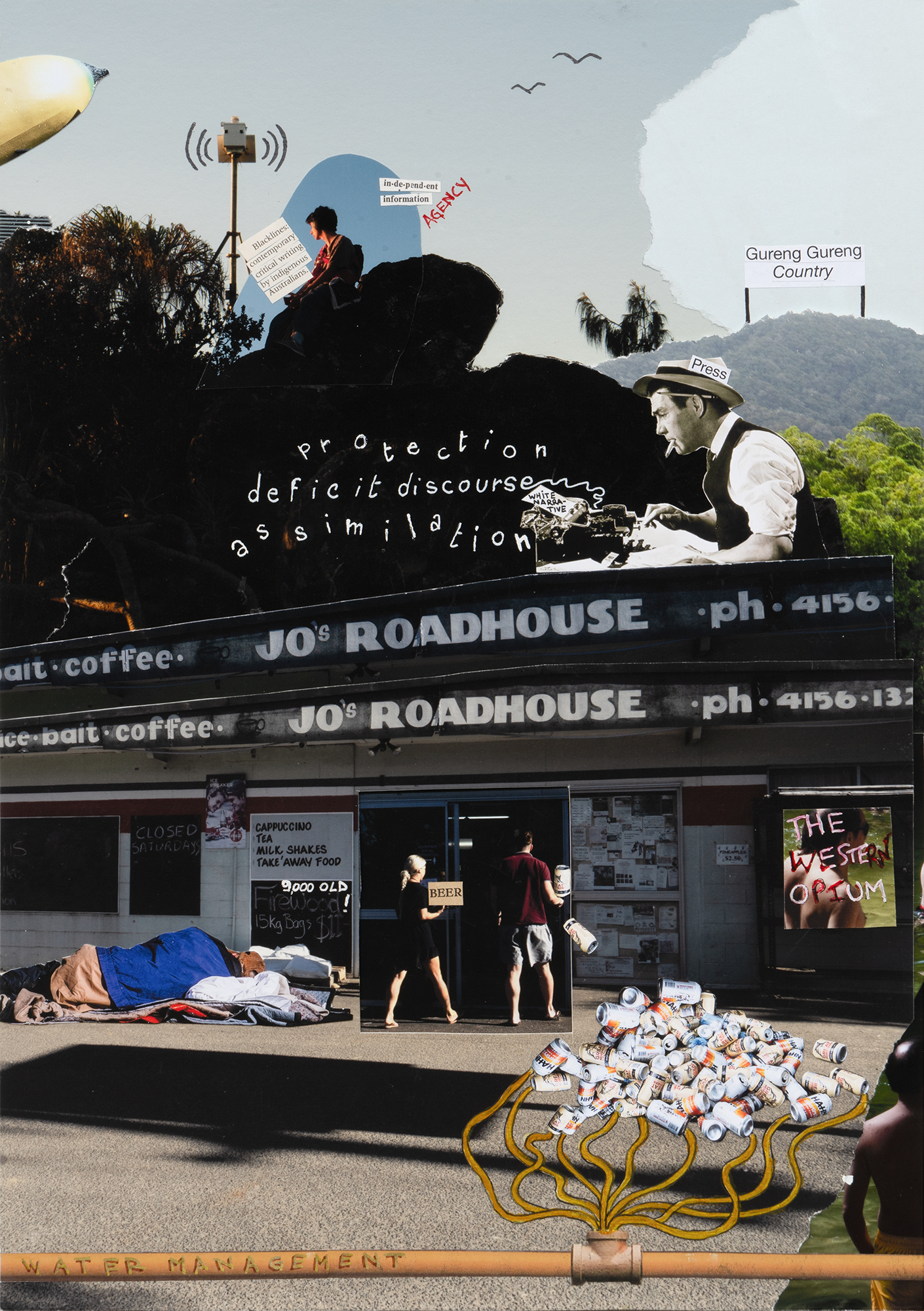
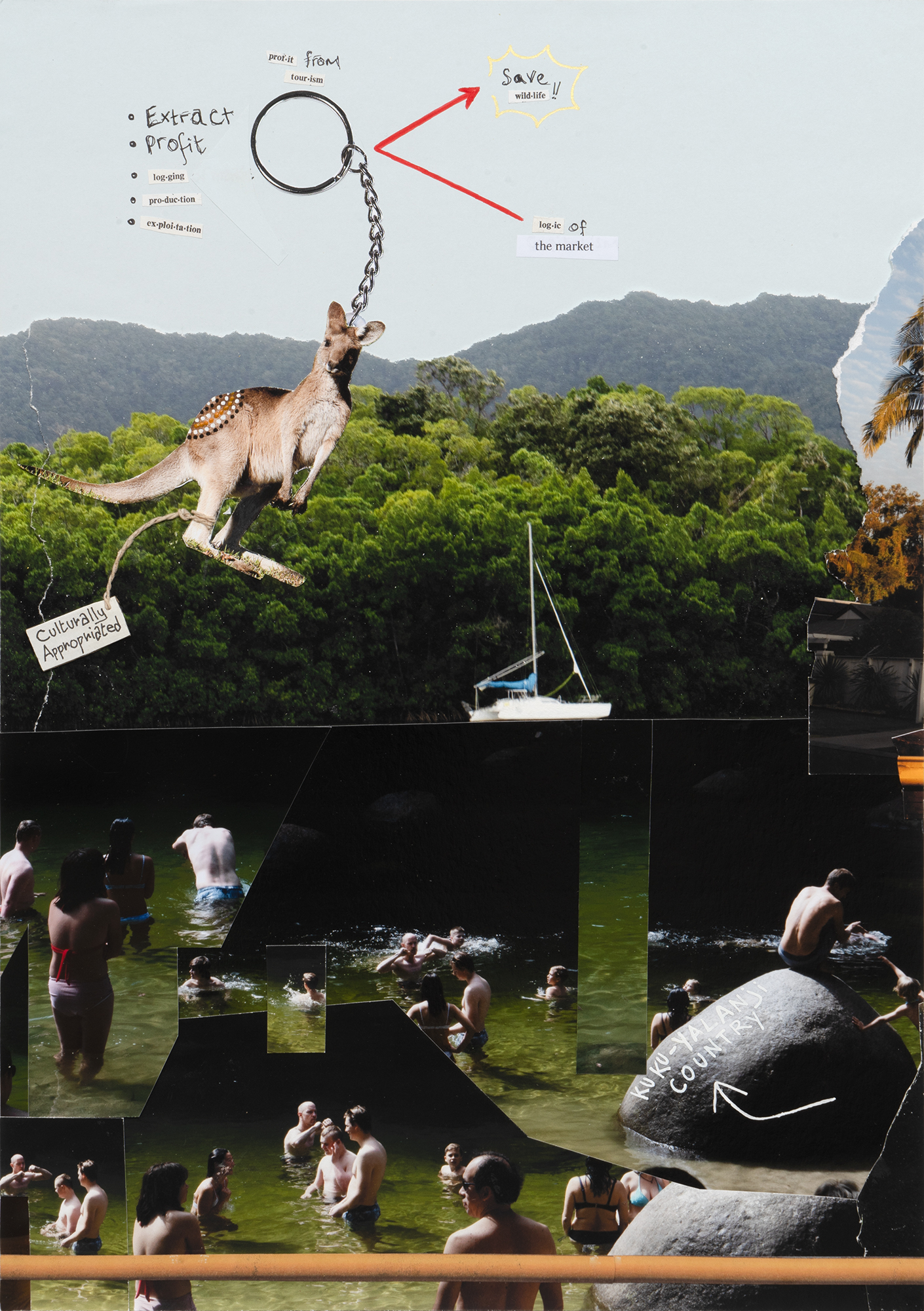
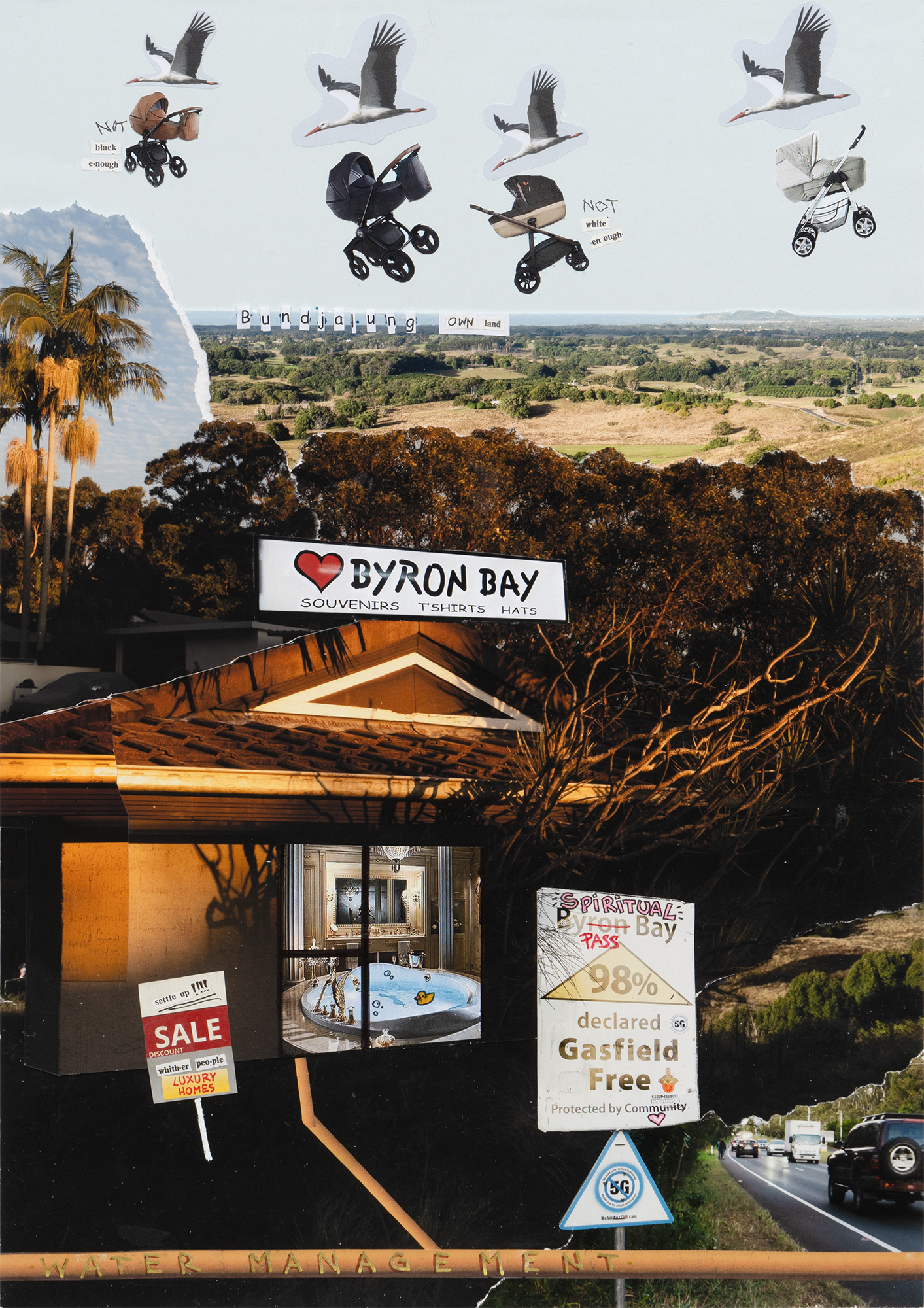
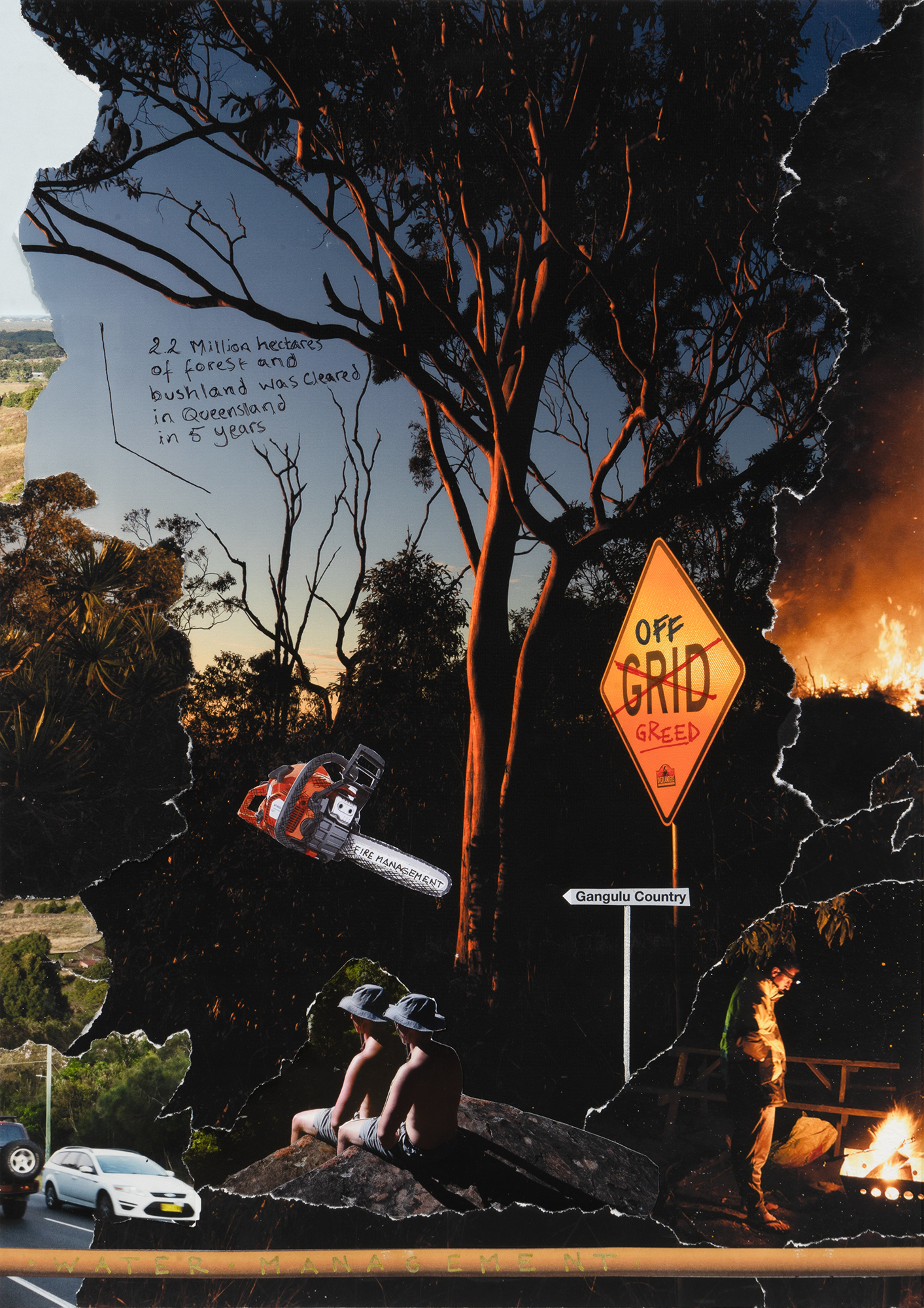
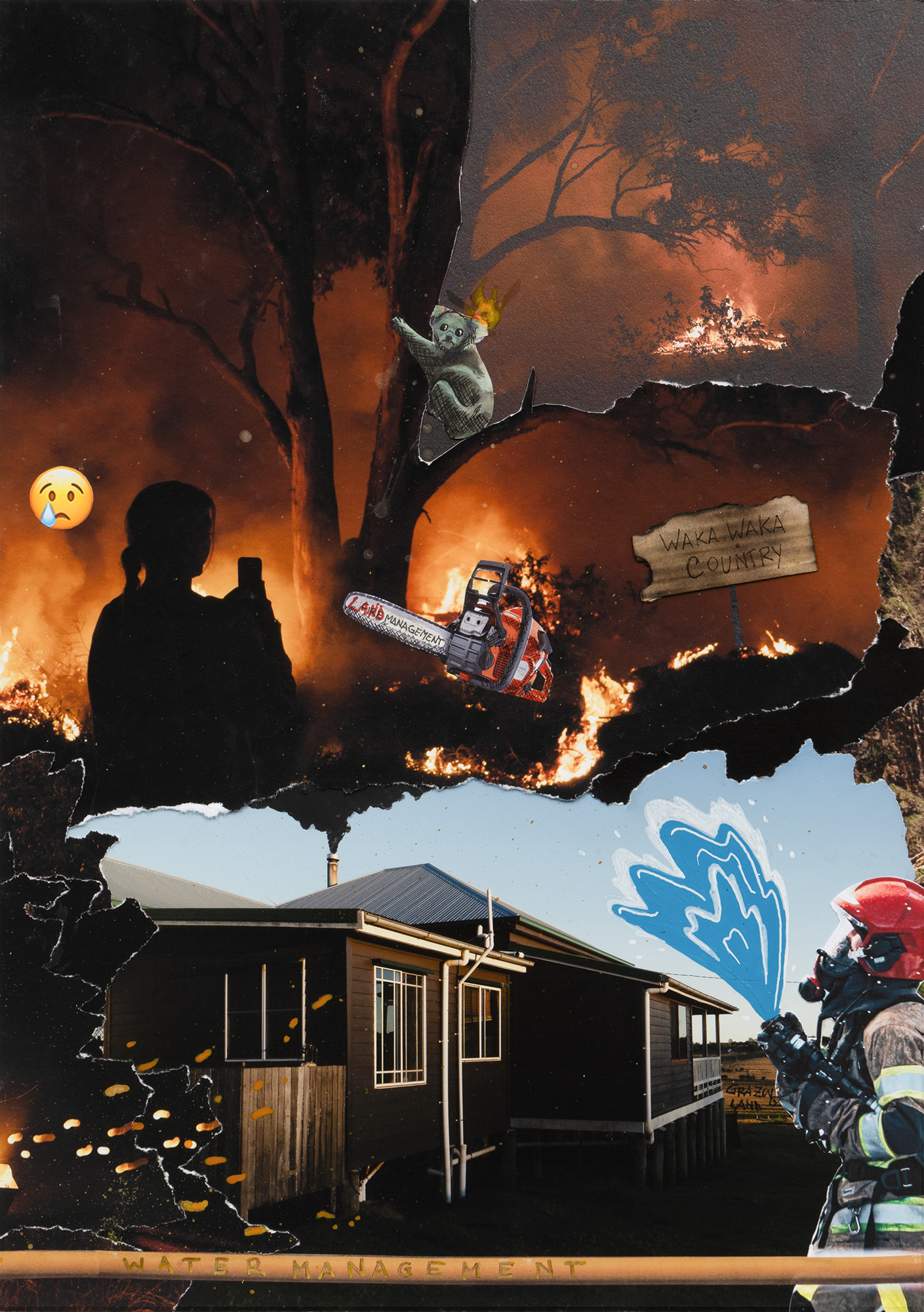
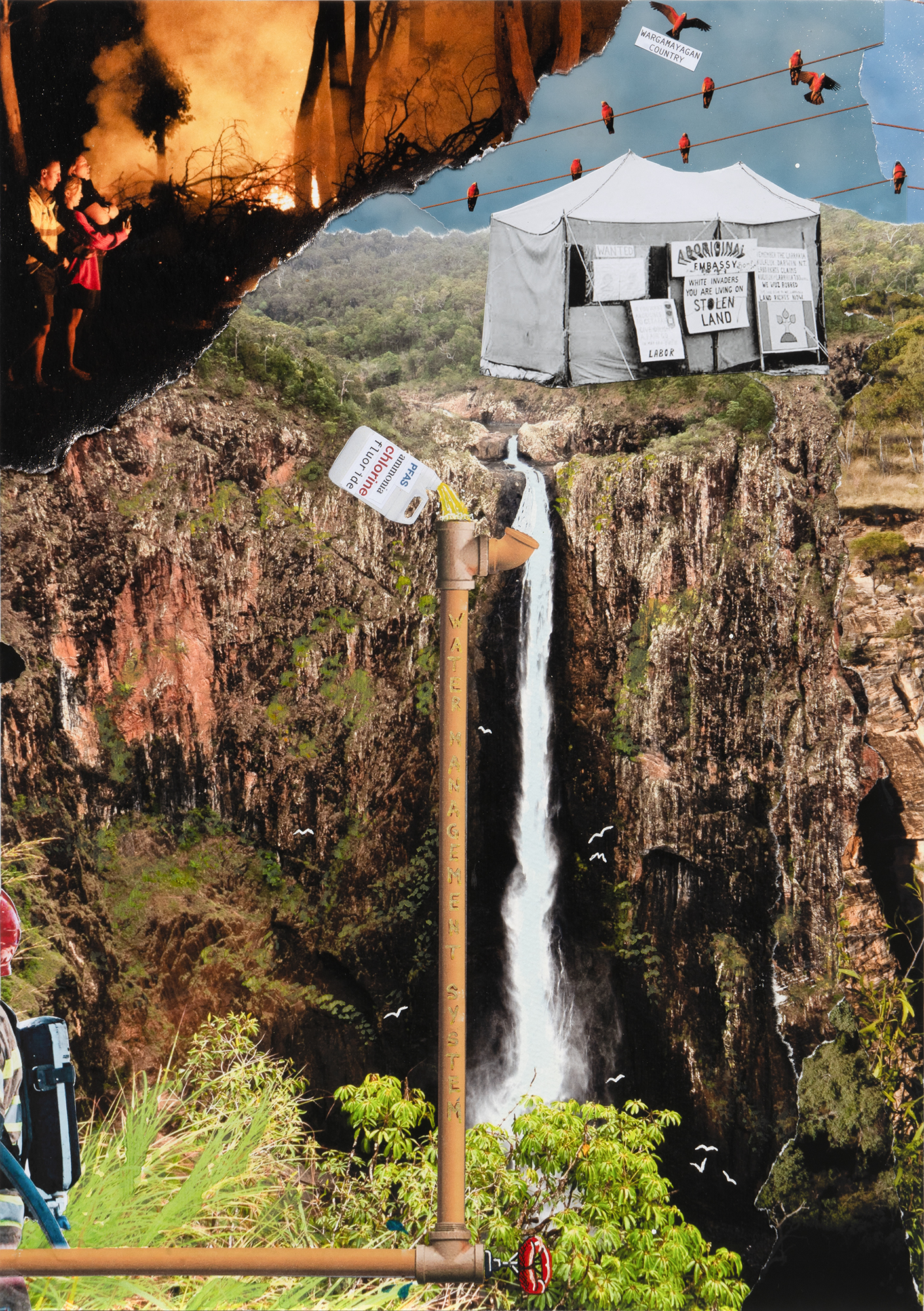
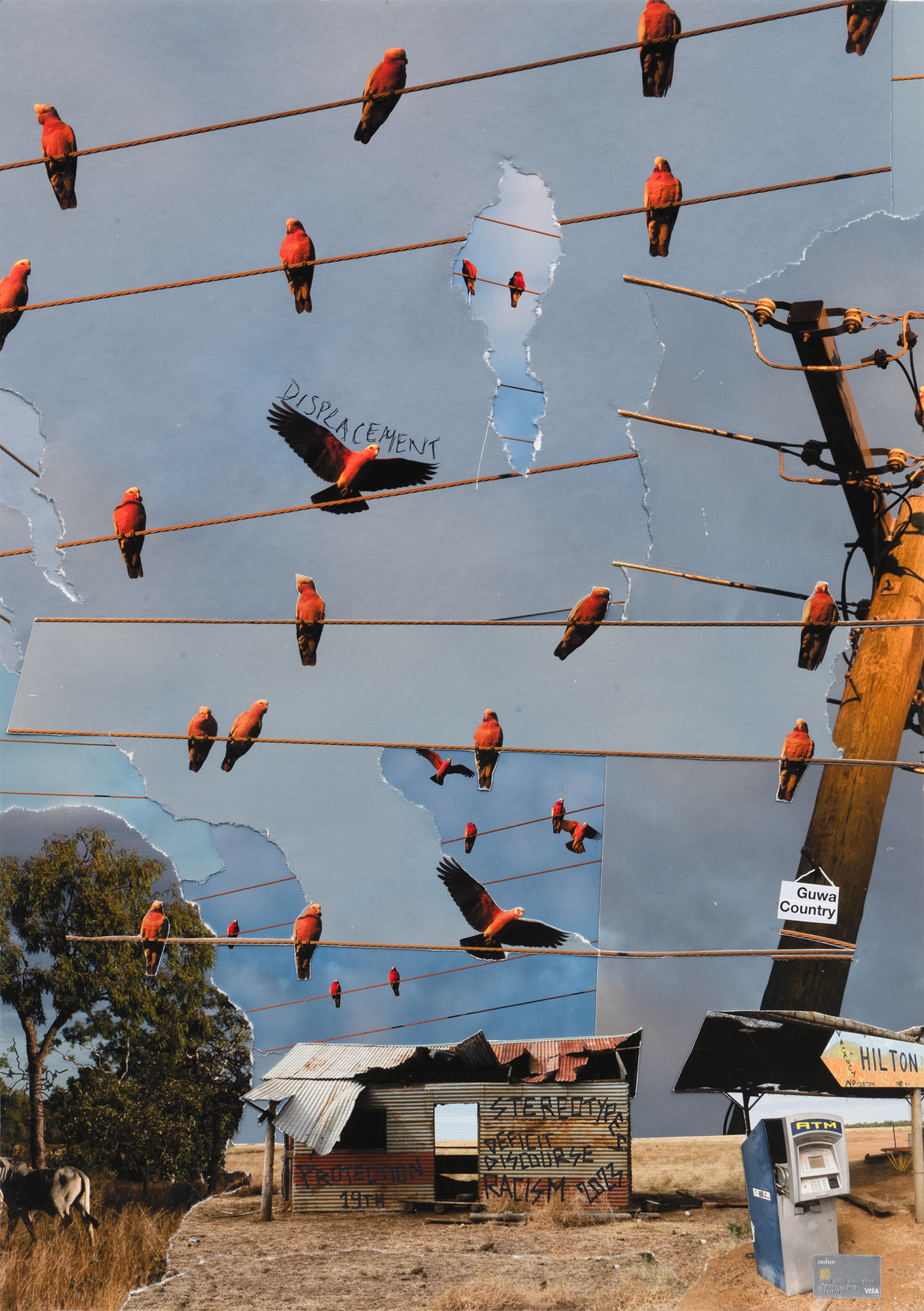
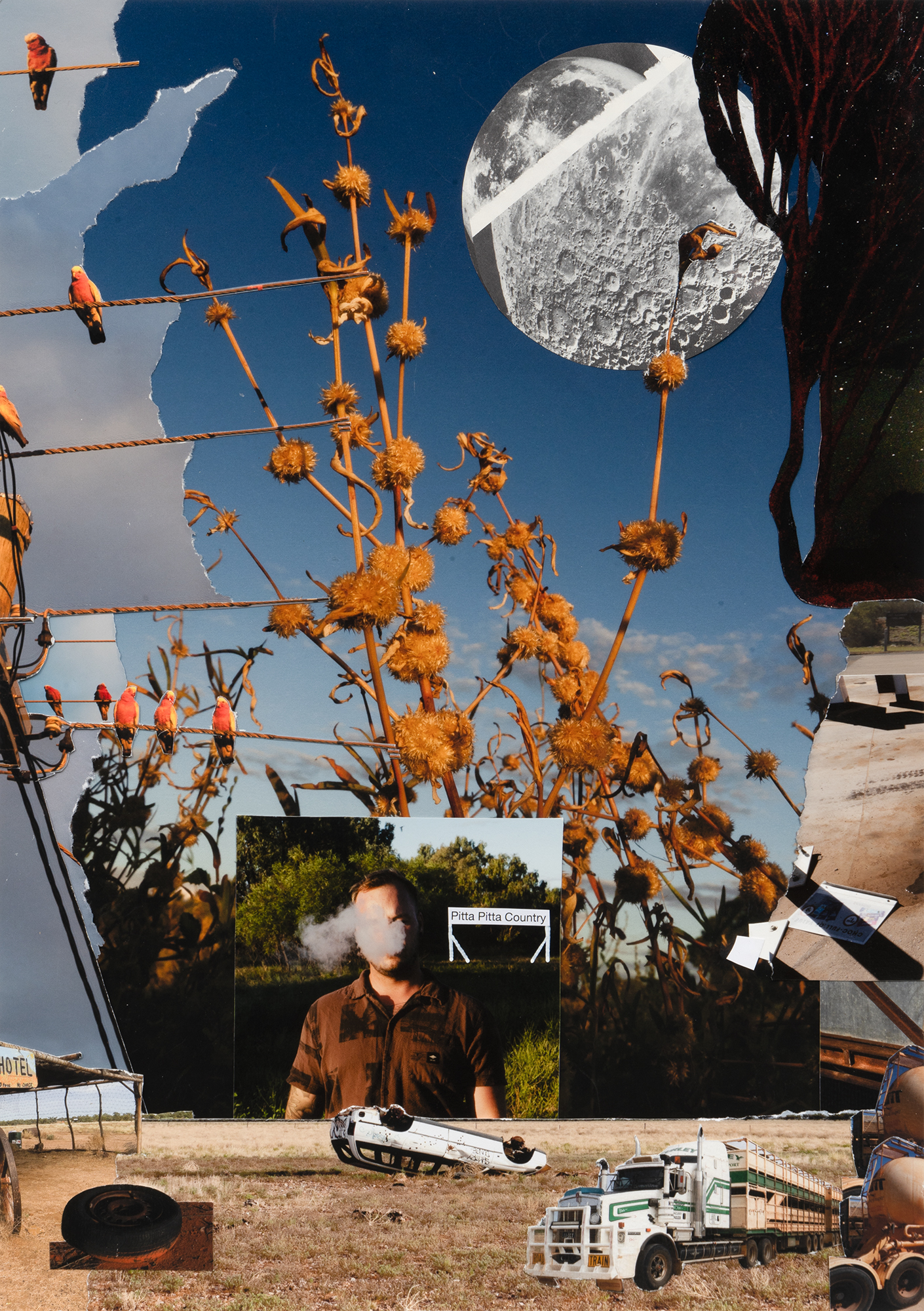
In ‘One land, many countries’ I wanted to reimagines the geography of ‘Country’ through photographs taken during my journey along the east coast of Australia and the outback, traversing the territories of about thirty Aboriginal nations.
The concept of ‘Country’, shared by the over 250 Aboriginal Australian languages, is often lost in translation to English. Transcending the Western idea of Nation, ‘Country’ is a living entity that unites land, water, plants, animals, spirits, and Aboriginal people in a synergistic and reciprocal relationship.
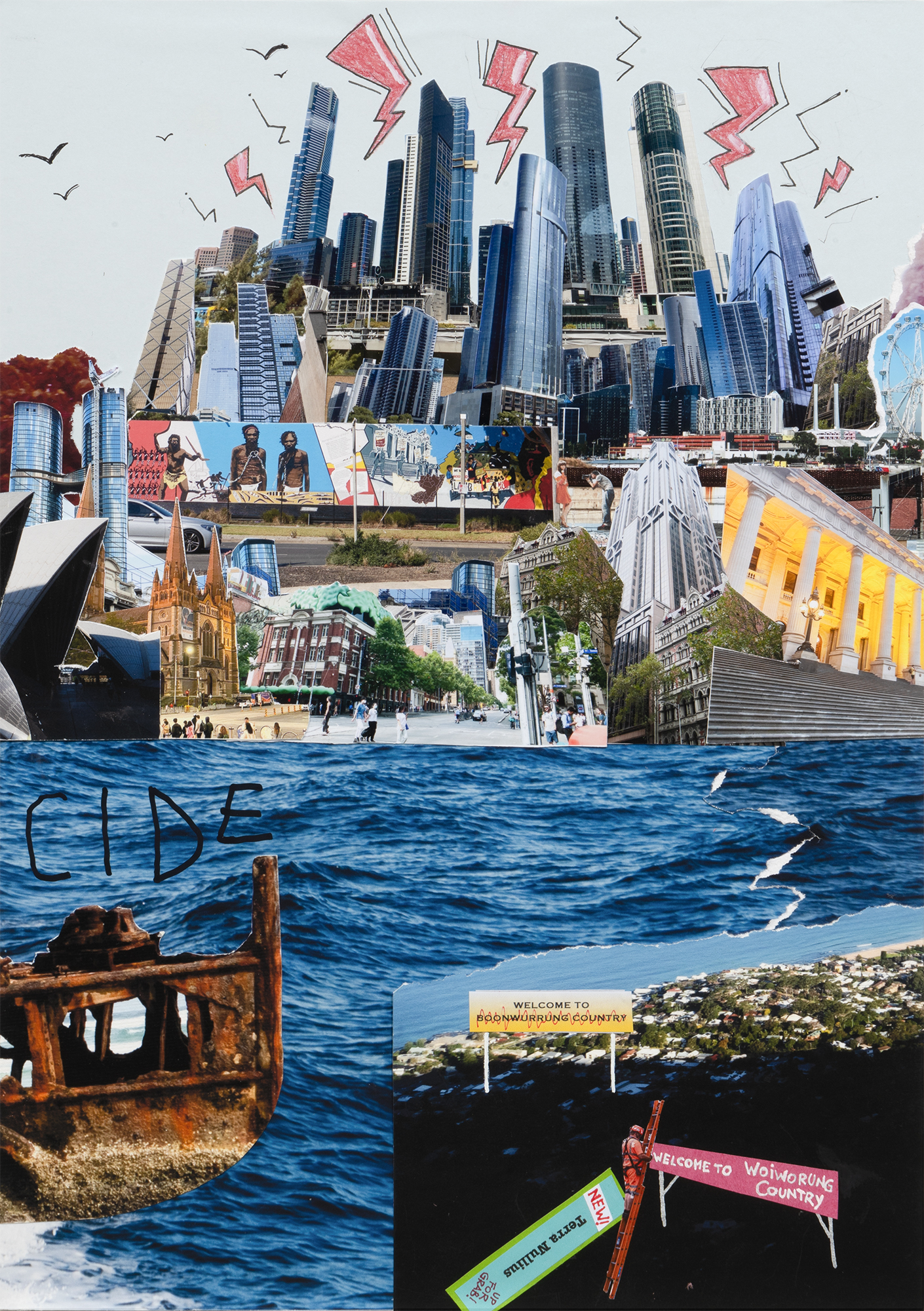
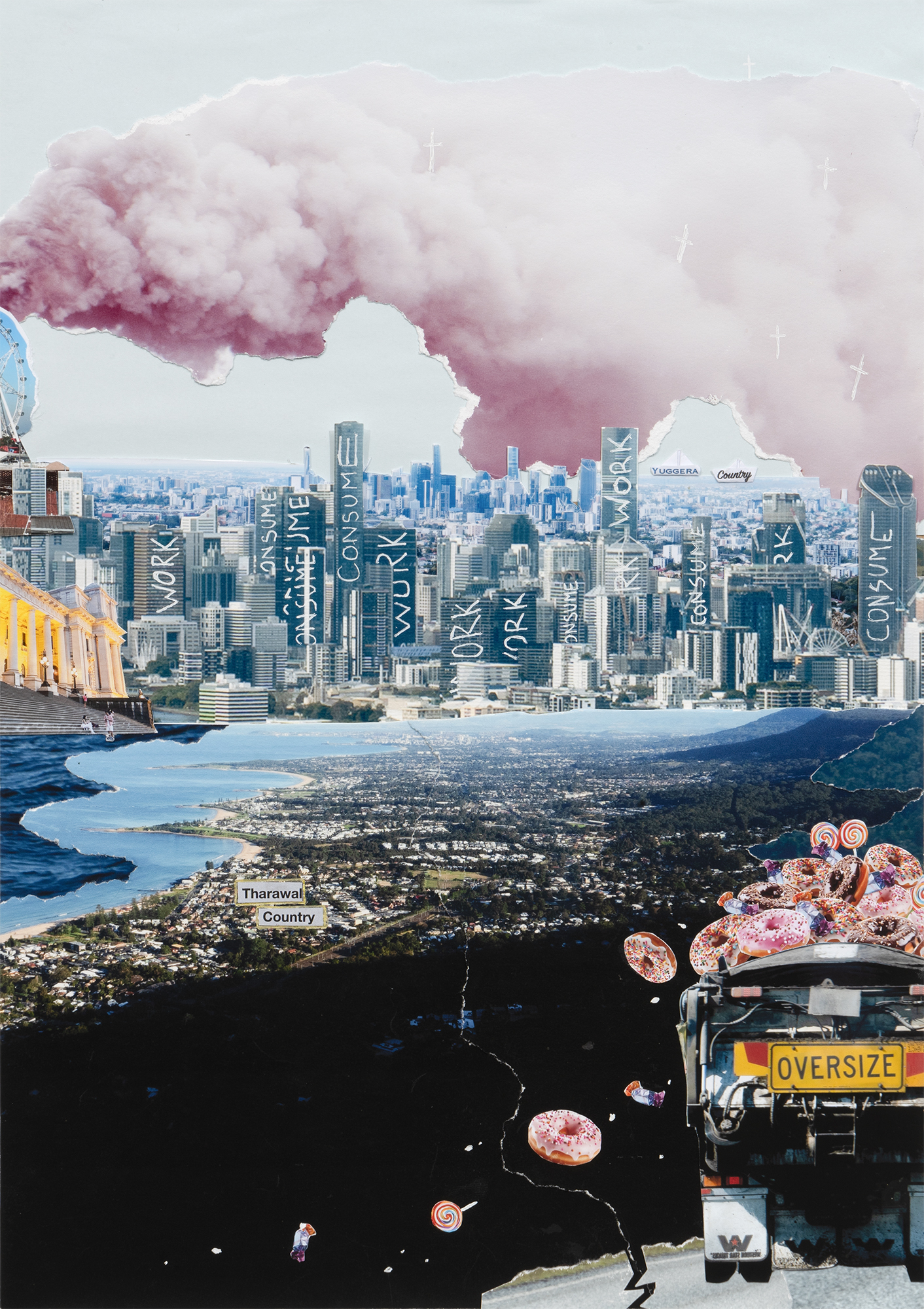
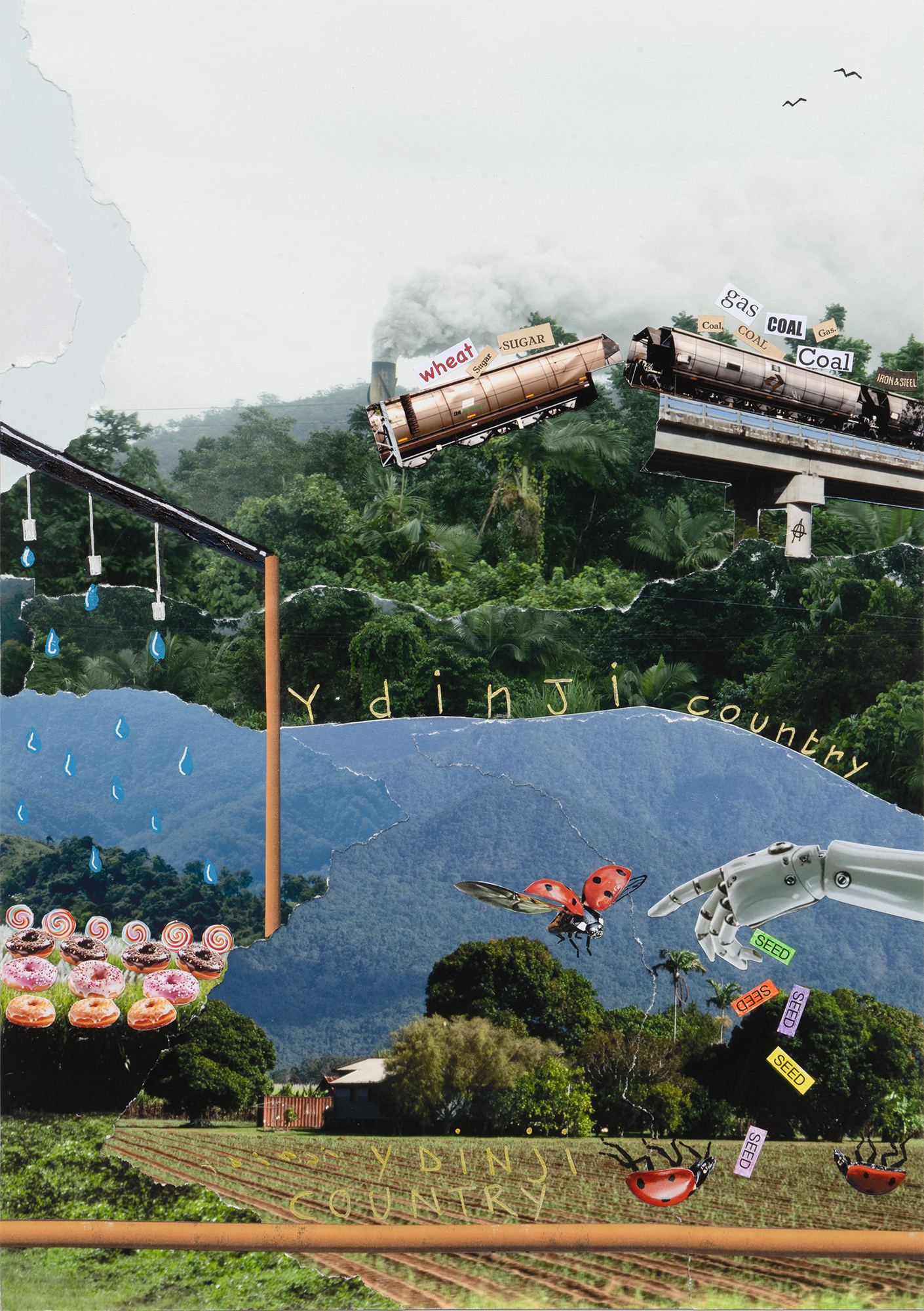
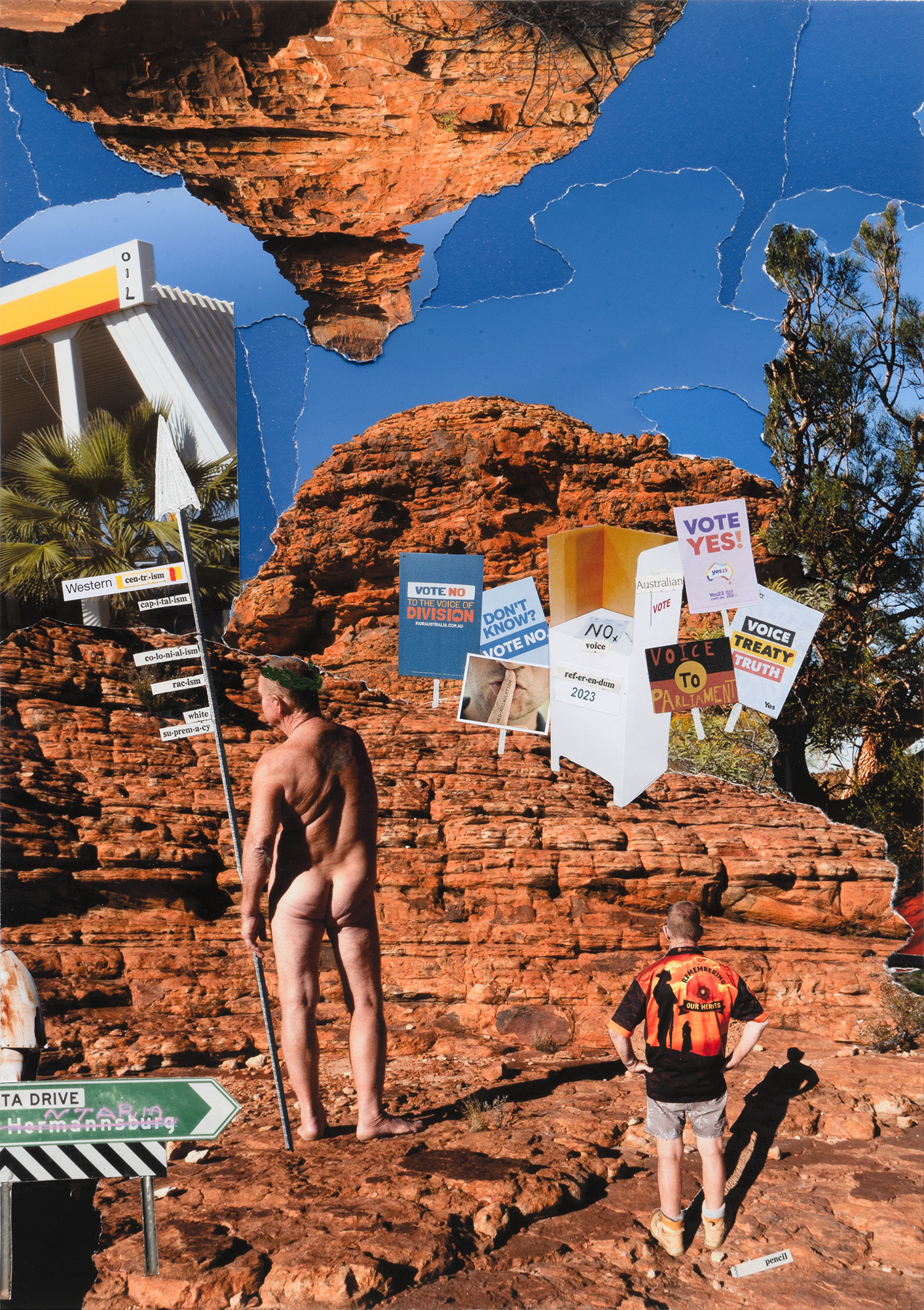
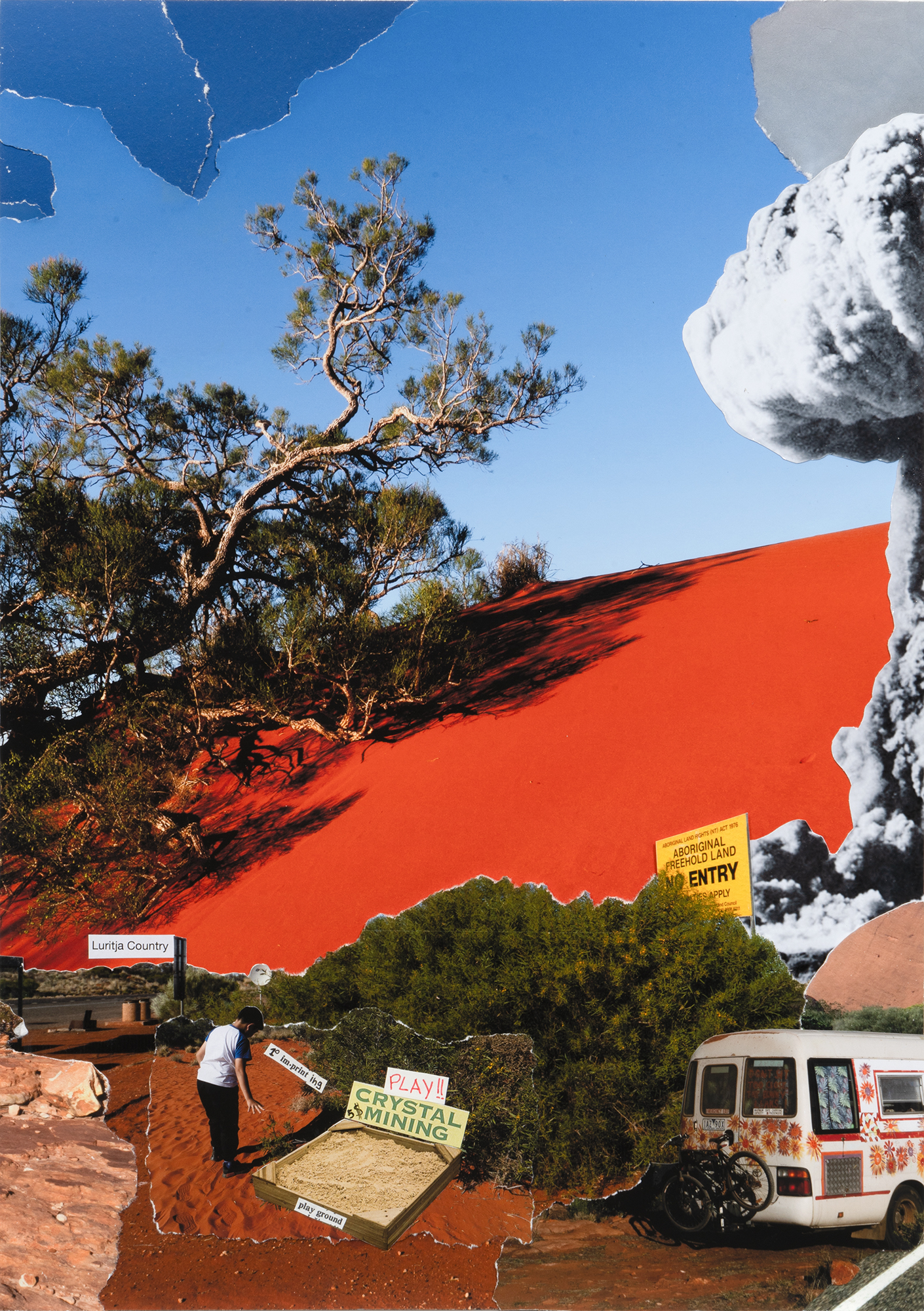
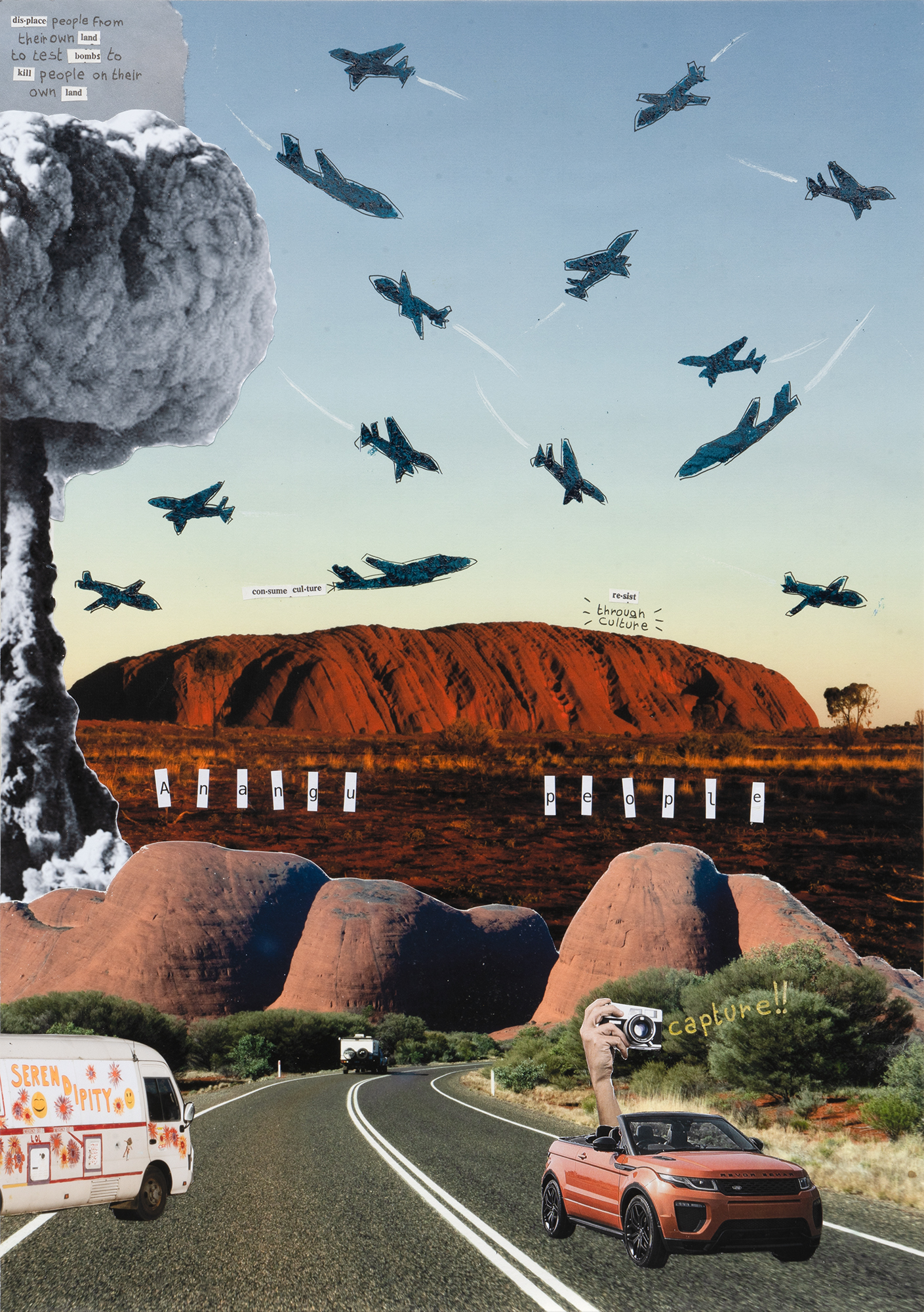
Like the elements of ‘Country’ and the single Aboriginal Nations and communities, the twenty panels of this collage joints each other to create a larger, stronger entity. Each panel hosts one or two Aboriginal nations I photographed and explores themes of diversity and interconnection, while also narrating stories of ecological loss, cultural appropriation, misrepresentation, racism, displacement, and genocide.
After centuries of Human activity in Europe, we have transformed the land for our use and ‘Country’ has become just a wilderness separate from us, foreign and profitable. In Australia, I witnessed the middle stage of this process. Aboriginal and Torres Strait Islander people have been looking after ‘Country’ for tens of thousands of years till Westerners’ expansion turned the land into something to extract resources from, never to be considered an entity that we must also give back and to which we are part.
By acknowledging the names of these lands’ human custodians and unifying them through collage, I draw some of the original borders of Australia that were washed away by dispossession and that are still present today, hidden behind the six official polygonally cut states.
Instead of attempting to represent Aboriginal Nations through a potentially flawed Western lens, my work place its self as a critique of the West, touching onto the shadows of technological advancement and growth. The key for this reading is the relatively brief history Australia since invasion as an example of colonialism all over the world which recurring practices, capitalistic expansion, racial genocide and oppression, function synergetically to translate into imperialism and white supremacy.
Emerging from my research project on photography as a tool of decolonisation, this work reflects on the indelible marks of the imperial process over land and people, which still endure today through internal colonialism. Despite the steps forward made by the struggle of Aboriginal communities, by obstructing self-determination the settler society prevents the stewards of these lands from speaking for themselves and for ‘Country’.
The existence of alternative stories within history stretches to new present-day concerns. Particularly water here, extracted from Country to be redirected to unsustainable practices, is like a wire connecting lands together, which remind us of the borderless consequences of climate change and the potential that unified communities hold. This story of oppression begins with the ironic twist of an AI-generated Captain Cook who, by holding a camera instead of a gun, triggers a reflection on modern biases and censorship stemmed by racist and nature-human narratives, reinforced by photography in the colonial era. These narratives survive till today and to the latest panels, with the growth of the travel industry consuming culture and the referendum in 2023. Metaphors of the unwillingness of our economic systems to give up on continuous growth and unsustainable consumeristic practices therefore, on the control exercised through racism, within institutions and popular culture, to prevent alternative systems from surfacing.
 Corinna LUCE